Monday, 24 October 2016

SYMPATHY FOR TODAY

Today is Adam Smith day at Paris I, with Monsieur Paul Rateau
Paul RATEAU
Maître de conférences [Philosophie]
Curriculum Vitae :
I. TITRES ET DIPLÔMES
- Maître de conférences à l’Université Paris 1 (Panthéon-Sorbonne) (depuis 2008).
- Thèse de doctorat : « La question du mal chez Leibniz : fondements et élaboration de la   Théodicée »,
   soutenue à l’Université de Strasbourg (2005).
   Directrice de thèse: Mme Martine de Gaudemar (Paris X-Nanterre).
 -Agrégé de philosophie (1998).
 -Ancien élève de l’École Normale Supérieure de Fontenay-Saint-Cloud (1994).
II. FONCTIONS ANTÉRIEURES
   2008-2007 : Assistant post-doctorant à l’Université de Neuchâtel (Suisse).
   2006-2004 : ATER (attaché temporaire d’enseignement et de recherche) à l’Université de Strasbourg.
   2003-2000 : AMN (allocataire moniteur normalien) à l’Université de Strasbourg.

So far M. Rateau has been the clearest of the lecturer's I have encountered. He is part of the CHSPM - Centre d'histoire des systèmes de pensée moderne. 


I have been musing on the stuff we have been reading so far. I do hope it makes sense. At least you can be sympathetic.

Adam Smith’s Theory of Moral Sentiments is written in seven parts. He begins the first part with “Of the Propriety of Actions”, Section I ‘Of the sense of propriety”. Chapter I, Of Sympathy. He then goes on at some length to discuss how he believes relationships between individuals work. How do ordinary individuals relate to each other in society and what constitutes appropriate and inappropriate behaviour. Does that behaviour arise naturally, from within, or artificially, of necessity through education and convention?

He appears to be suggesting that in order for individuals to survive there must be a certain degree of ‘sympathy’ between them, that there is some sort of harmony or agreement between them, or on the part of one person with respect to another.  The premise is that there is an universal sympathy between persons arising through the senses of the body, in that every human understands pain and pleasure from their own experience, e.g. by being hit, or injuring oneself through accident, suffering from cold or heat, the loss of a loved one, anxieties of love, jealousy and hate, resentments, in short any number of ‘feelings’ which are viewed as part of the ‘human condition’.

How a person displays those feelings, and how others react to those feelings is dependent on the degree of closeness between them, e.g. wife, child, cousin, friend, casual acquaintance, stranger… The extent and character of the behaviour displayed by the individual exhibiting those feelings, will of course vary in degree and proportion according to circumstances.  Similarly the response, and the extent and character of the behaviour, of the person for whom the display is intended, will vary in some degree depending on circumstances. It is the same for the casual observer of the display. Whether that display is appropriate or inappropriate in the particular circumstances depends on the ‘conventions’ society has accepted as being appropriate or inappropriate in the circumstances. The behaviour can be viewed as an over reaction or woefully lacking in feeling.  Again it is a matter of degree and circumstance. In addition, because of the nature of human sympathy in respect of certain matters, e.g. the death of a loved one, the birth of a child, there is an expectation, by others, that the person concerned will react in a certain way. Whether that is the result of education and convention or indeed natural sympathy, might well depend on the individual concerned. It is a matter of propriety and not just a question of mimicry.


The matter of sympathy, then, is a vital condition in understanding communication between individuals in society, and fundamental to the languages we use. The nature of sympathy will remain unchanged no matter what the situation, where-so-ever we are. The matter of propriety, however, is entirely dependent on the situation and the circumstances in which we find ourselves.

After todays lecture there is more to come on this subject - Adam Smith is a problem or perhaps it is M. Rateau.


Saturday, 22 October 2016

MULLING AT THE PANTHEON-SORBONNE AND THE TUILLERIE

The teaching methods at 'Paris I' are a bit different from Dartington and Falmouth. Admittedly, my recent pedagogic experience has been with a mere five tutors, one of whom has been particularly influential in my recent academic life. Also, the number of students per lecture was considerably smaller at the English Institutions. This allowed for much more discussion and argument during the course of a lecture. In addition, there were occasional one to one sessions with a tutor, some of which were scheduled but tutors were more or less available at any time on request. In the course of study one felt there was always a close guiding hand of a person willing to listen and give progressive feedback, despite the overall demands on their time, to the work one was doing. At least that was my experience. Here, in Paris, although only an 'auditeur libre', one is pretty much on one's own. I believe there is some access to the teaching staff, but they seem to come in and out of the lectures pretty swiftly. Not many of the students seems to engage directly with the teachers outside the lecture room, save for discussing schedules and such. I may be wrong about that, but it is the impression I have. During the course of a lecture there can be a number of 'exposé' by students. This is a presentation by a student doing a close reading of a particular text. The class is then invited to ask questions of the presenter after which the lecturer then elaborates on the subject, presumably tying it all together. I am no longer used to the speed at which the French speak and, in a crowded room, what with rustlings, other surrounding noises and the irritating habit the French have of shortening words by oral abbreviations, it is difficult to catch everything.
This is just an early impression of things at the moment, the content of the lectures is new to me and I am beginning to appreciate the material. I have not read Hume or Smith in any detail before, and it is exciting stuff. At least I think so. As to Thoreau, well, in the sixties he seemed extremely relevant. Not to say that some of his stuff has lost its edge, but, in my present circumstance, it is not as attractive as the Scottish Enlightenment.  It is still very much a worthwhile subject of study and one cannot help but admire Thoreau's tenacity in trying to make a reality of the words proffered by the first two sentences of the Declaration of Independence and the preamble to the Constitution of the United States. He was very much a man of his time. But that is another story. At least he was around for the camera. 

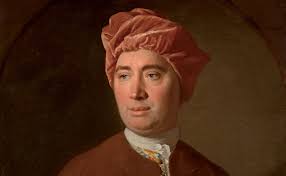
David Hume 1711-1776

Adam Smith 1723-1790

Henry Thoreau 1817-1862
It is interesting to note that Hume died the year of the Declaration of Independence, Smith died in the infancy of the French Revolution just one year old, and Thoreau died at the beginnings of the American Civil War.

The present study of Hume is from  Volume Two of the Treatise on Human Nature, Book Three - Of Morals, Part II  Of Justice and Injustice, Of the Origin of Justice and Property, Of the Rules which determine property, Of the Obligations of promises; Part III Of other virtues and vices, Of the Origins of the Natural Virtues and Vices.

As to Smith, we are dealing with The Theory of Moral Sentiments, Part I Of the Property of Actions, Section I Of the Sense of Propriety, Chapter I Of Sympathy, Chapter III Of the Manner in Which we Judge of the propriety or impropriety of the affections of other Men, by their concord and dissonance with our own.

We have just been for a walk in the Tuilleries Gardens where there is at present an exhibition of various pieces of sculpture.


A bit nippy, the weather, but lovely and warm in the sun. There is also on display a series of photographs accompanied by displayed text by way of explanation. A bit of performance writing. The pictures are not in the correct order, The texts are in English and French are are meant to be read from one panel to the next as they are incomplete on each panel. The panels are some distance apart and it is not easy, unless one walks quite some distance between them all, to follow the text in some grammatical order. One assumes, as the text concerns instructions for photographing plants and other feature in gardens, that it is meant to be read in some sort of cohesive sequence. Of course I am probably wrong about that, as I am about so many things.

As to sympathy, according to Smith, I cannot say that I was in any kind of sympathetic state in respect of these panels and the absent artist. The photographs, in Celia's opinion, were not very good. I was, according to Smith, in sympathy with her. It is, of course, more difficult to feel or express sympathy in the absence of a subject, nor do I suppose it is possible to be sympathetic to an inanimate object. Does sympathy require, as object, a living creature, and in particular, a creature with which we have some familiarity, or can one feel sympathy towards an object, particularly in respect of a work of art, or piece of craftsmanship, or what some would class as an 'objet trouvé', or indeed any object that takes our fancy.

If we have sympathy as signifier what is the signified? As a representamen, what can the object and interpretant be? With this stuff it is all dependent naturally on context, as with everything.

I am coming to grips with Hume's views on justice and property, whether natural of artifice. Sympathy plays a great role in the emergence of justice and it is no wonder that Hume and Smith were such great friends and in great sympathy with each other. I am still mulling but there will be more of this anon.


Wednesday, 12 October 2016

PARIS - BEGINNING THE FIRST FOURTEEN DAYS

A year and a half has passed since I last ventured into the blogosphere. Much has happened. I have acquired a season ticket to Guys Hospital along with visits to the GP.  His practice seems to be expanding, which is hardly surprising. It has been an interesting experience, although one I could have done without. Medical treatment, even if apparently successful, is not without it's particular problems. What are called euphemistically side effects can linger on for some considerable time. I will henceforth cease complaining. The important thing is that I have regained the ability to drink and enjoy Chauvet Grand Rose. This is a singularly nice pink champagne once listed the Hachette Guide des Vins as a "vin remarkable". In the 2015 guide it is described as "Un rosé d'assemblage de pinot noir et de chardonnay vinifié sans fermentation malolactique. Nez riche, sur les fruits rouges (fraise des bois) et le sous-bois. Bouche ample, fidèle au nez, tout en fruits rouges (fraise, groseille), sous-tendue par une fraîcheur acidulée" which google loosely translates as "a pinot noir rosé assembly of Chardonnay and vinified without malolactic fermentation. rich nose of red fruit (strawberry) and the undergrowth. wide mouth, faithful to the nose, while red fruit (strawberry, gooseberry), underpinned by a tangy freshness". The rich nose, should be translated as wild strawberries, a very different nose altogether. Nonetheless I am pleased that it is back on the agenda. Other wines still elude me; however, I believe I will cope if from here on I am reduced to drinking only pink champagne. How long that will be is another matter.

In light of these past events a variety of journeys have been undertaken. A wiz round France Spain and Portugal, a quick trip to New York a la recherche du temps perdu. Huntspoint Hospital, where I was born, is no more. It is now a post office. The childhood homes are still in situ and Mount Vernon appears (almost) very much the same going on 68 years and it was 67years ago in June of 1949 that all the family goods were sold off and we moved to France.
2016

1948

So here we are back in Paris, sitting in a flat on the Rue Saint-Hyacinthe corner of the Marche Saint Honore above a lovely wine bar, come brasserie, called Le Rubis. Very nice it is too. 
I have enrolled as an 'auditeur libre' at the Sorbonne Universite Paris I - doing a bit of philosophy


I have been to three classes although the second was cancelled. The first is Justice et Droit  et la Lumiere Ecossaise - in the process of reading from the Philosophical Works of David Hume Volume II, Book III of Morals. Part II Of Justice and Injustice, sections 1 and 2. 

David Hume was discussed

Adam Smith rears up as well in the second class unfortunately cancelled on Monday. We are meant to be dealing with The Theory Of Moral Sentiment, The sense of Property, Chapter 1- Sympathy.  In effect quite a lot of reading to do. The third class, which is quite late, is to do with Thoreau's Civil Disobedience. The class is from 7PM to 9PM with upwards to 30+ students. It takes place in the Pantheon bit of the Sorbonne in a rather large room with a raised platform at the end. Not a theatre but a lecture room. Sometimes difficult to hear. Mostly young final year students doing one of the required courses, a mixture of History of Philosophy, Philosophy and Science, Logic, etc.. There are about six categories they have to deal with. The atmosphere is much the same as it is at any University, save there is not so much in the way of discussion or back and forth banter. I supposed that is difficult with such a large group. One of the students did a presentation of a paragraph from the text. He did read out the English text which he then translated and analysed; however, his English pronunciation was appalling. I confess I found it hard to understand and even more difficult to find the relevant passage to be able to follow his flow. Other students not terribly helpful when asked where and what the class has got up to. They are in their fourth week so it's catch up for me. This presentation was then followed by the lecturer's point of view going over the same passage. Slightly better English but very laborious. As close a reading as one would want. Two hours to discuss the last highlighted section.
Amphi IIB
The mass of men serve the state thus, not as men mainly, but as machines, with their bodies. They are the standing army, and the militia, jailers, constables, posse comitatus, etc. In most cases there is no free exercise whatever of the judgement or of the moral sense; but they put themselves on a level with wood and earth and stones; and wooden men can perhaps be manufactured that will serve the purpose as well. Such command no more respect than men of straw or a lump of dirt. They have the same sort of worth only as horses and dogs. Yet such as these even are commonly esteemed good citizens. Others--as most legislators, politicians, lawyers, ministers, and office-holders--serve the state chiefly with their heads; and, as the rarely make any moral distinctions, they are as likely to serve the devil, without intending it, as God. A very few--as heroes, patriots, martyrs, reformers in the great sense, and men--serve the state with their consciences also, and so necessarily resist it for the most part; and they are commonly treated as enemies by it. A wise man will only be useful as a man, and will not submit to be "clay," and "stop a hole to keep the wind away," but leave that office to his dust at least: 

I am rather enjoying the reading, although I find all these men can so easily be supporters of the Tory Party. Thoreau begins his Civil objections with:

"I heartily accept the motto, "That government is best which governs least"; and I should like to see it acted up to more rapidly and systematically. Carried out, it finally amounts to this, which also I believe--"That government is best which governs not at all"; and when men are prepared for it, that will be the kind of government which the will have. "
Smith's "Wealth of Nations" is a apology for the small businessman, what used to be called the backbone of Britain,. and Hume posits that Justice stems from the acquisition and protection of property or rather possessions.. There is indeed a kind of justice that revolves around such matters, but that, in my respectful submission, your honour, is not the whole story.

There is another quote from Thoreau which I believe has a bit of relevance for todays potential voters in the forthcoming elections in the United States, just 4 weeks away:
All voting is a sort of gaming, like checkers or backgammon, with a slight moral tinge to it, a playing with right and wrong, with moral questions; and betting naturally accompanies it. The character of the voters is not staked. I cast my vote, perchance, as I think right; but I am not vitally concerned that that right should prevail. I am willing to leave it to the majority. Its obligation, therefore, never exceeds that of expediency. Even voting for the right is doing nothing for it. It is only expressing to men feebly your desire that it should prevail. A wise man will not leave the right to the mercy of chance, nor wish it to prevail through the power of the majority. There is but little virtue in the action of masses of men. When the majority shall at length vote for the abolition of slavery, it will be because they are indifferent to slavery, or because there is but little slavery left to be abolished by their vote. They will then be the only slaves. Only his vote can hasten the abolition of slavery who asserts his own freedom by his vote.
We could spend a good few hours discussing the above paragraph and no doubt will, but I leave it to you to ponder. 

There was a joke going around in the late forties around the time of Truman's defeat of Dewey in 1948. Lucky Strike cigarettes had a slogan LSMFT - Lucky Strike means fine tobacco. It was taken up by the republicans as LSMFT - Lord save me from Truman - It could easily be brought back, but cigarettes are unpopular -  LSMFT- Lord save me from Trump.

There is a lot more yet to learn. More of this anon,

Wednesday, 25 February 2015

THE SOUND OF CHINA


Communication is primarily a matter of sound. As human populations emerged round the world, the sounds made by the various individuals within a particular group to communicate with each other, and therefore, by some common consent referred to specific objects or ideas, became that groups language. Over a period of time various group languages developed, becoming more refined, sophisticated and subtle. As these groups encountered each other and began to interact, it became apparent that the same objects and ideas were being referenced by different sounds. Translation was possible. Individuals could learn each other’s sounds. It also became apparent that due to separations, migrations and movements of certain individuals from one group, some languages were more closely related or had similar roots, and nearly similar sounds were made to indicate the same things. Hence English - dog or hound, German - hund, Danish - hund, Dutch - hond,  Swedish – hund, Norwegian – hund, or  Latin – canis, Italian - cane, Spanish - can, Portuguese - cão, Romanian – câine.


Still nothing changes the fact that the sounds made to name things, were entirely arbitrary, and arrived at by some common consent in order to facilitate communication within a group. As groups became more complex and interactive, various forms of writing developed. 


Writing involved a far less arbitrary approach. Writing of necessity involved reading. Writing, when read would have to produce the necessary sounds in order to be understood. It had to produce the phonetics and structure with the same efficacy as the spoken word, and as a result various alphabets developed in order to reproduce the sounds of the language being written. Some languages adopted a pictorial or logographic approach, some used syllabaries and still others used phonemic orthography, or some combination of writing systems. Whatever system was used it had to reflect the sounds of the language.