Tuesday, 27 September 2011

MISSIONS OF CONQUEST

William I
The 27th of September marks the beginning of the Norman Conquest of England 945 years ago in 1066. William (Guillaume in French, a.k.a. William the Bastard) was then William II Duke of Normandy. He had planned to set off much earlier, but the weather prevented his fleet from sailing. On 12 September the wind direction turned and William's fleet sailed. A storm blew up and the fleet was forced to take shelter at Saint-Valery-sur-Somme and again wait for the wind to change. On 27 September the Norman fleet finally set sail, landing in England at Pevensey Bay (Sussex) on 28 September.


An evening in a hotel restaurant at
St Valery-sur- Somme
Saint Valery is at the mouth of the Somme River in Picardy, northern France. The name Somme comes from a Celtic word meaning tranquility. Its history has hardly been tranquil, given the number of soldiers who died during the Battle of the Somme in World War I from July to November 1916. The river also featured in a military campaign of Edward III in 1346, culminating in the Battle of Crécy; and in a campaign of Henry V, which led to the Battle of Agincourt in 1415.

In keeping with the military theme of the month, The first of the Liberty Ships was launched on the 27th September 1941. The ships initially had a poor public image and to try to assuage public opinion, 27 September 1941 was designated Liberty Fleet Day, and the first 14 "Emergency" vessels were launched that day. The first of these (with hull number 14) was Patrick Henry, launched by President Franklin D. Roosevelt at the Bethlehem-Fairfield Shipyard in Baltimore, Maryland. Other "Emergency" vessels launched that day, in various yards around the country included: SS John C. Fremont, SS Louise Lykes, SS Ocean Venture, SS Ocean Voice, SS Star of Oregon, and SS Steel Artisan (later known as USS Barnes and HMS Attacker).
In the speech delivered at the launching, Roosevelt referred to Patrick Henry’s “Give me liberty of give me death” speech of 23 March 1775. Roosevelt said that this new class of ships would bring liberty to Europe, which gave rise to the name "Liberty ship". Here is a view of the last of the liberty ships 1944.


The  SS Patrick Henry’s maiden voyage was to the Middle East. During World War II she made 12 voyages to ports including Murmansk, Trinidad, Cape Town, Naples, and Dakar. She survived the war but was seriously damaged when she went aground on a reef off the coast of Florida in July 1946. She was scrapped at Baltimore in 1960.

It has been stated that on the 27th September 1944, the Kassel Mission resulted in the largest loss by a United States Army Air Force group on any mission in World War II. Herewith is a combat chronology of the USAAF for that day:
WEDNESDAY, 27 SEPTEMBER 1944
EUROPEAN THEATER OF OPERATIONS
STRATEGIC OPERATIONS
(Eighth Air Force):
Mission 650: 
1,192 bombers and 678 fighters are dispatched to hit industrial and transportation targets in W Germany and use PFF methods for all targets; 28 bombers and 2 fighters are lost:
1 - 421 of 462 B-17s hit a secondary target (Cologne) and 10 others hit Blatzheim; 1 B-17 is damaged beyond repair and 165 damaged; 3 airmen are KIA; 7 WIA and 1 MIA. Escort is provided by 221 P-47s and P-51s; they claim 5-0-0 aircraft in the air; 3 P-47s are damaged. 
2 -  415 B-17s are dispatched to hit Ludwigshafen/Opau oil refinery (214) and Mainz (171); 4 others hit targets of opportunity; 2. 2 B-17s are lost and 142 damaged; 3 airmen are KIA, 9 WIA and 19 MIA. Escort is provided by 212 P-47s and P-51s; they claim 1-0-0 aircraft in the air; 1 P-47 is damaged. 
3 - 315 B-24s are dispatched to hit Kassel/Henschel aircraft plant (248); 35 also hit Gottingen; they claim 5-3-0 aircraft; 26 B-24s are lost, 6 damaged beyond repair and 41 damaged; 20 airmen are KIA, 2 WIA and 245 MIA. Escort is provided by 207 P-38s, P-47s and P-51s; they claim 25-0-6 aircraft in the air and 5-0-1 on the ground; 2 P-51s are lost (pilots MIA), 1 P-51 damaged beyond repair, and 2 P-38s and 2 P-47s damaged. 
Mission 651: 
8 of 10 B-17s drop leaflets in France, the Netherlands and Germany during the night. 163 B-24s on a TRUCKIN' mission carry fuel to France.


Somebody had to shoot the pictures:

Monday, 26 September 2011

WORDS AND REVOLUTIONARIES

The government of the United States seriously began on the 26th September 1789 with the appointment of the first United States Secretary of State in the person of Thomas Jefferson (age 46). John Jay (age 44) was appointed the first Chief Justice of the United States and Edmund Randolph (age 36) the first Attorney General. The rule of law was firmly put into place. Samuel Osgood (age 42) was appointed the first United States Postmaster General. Vital communications had to be set into place. 

Jefferson
Jay


Osgood
Randolph


It must be remembered that all these men, were 13 years younger in 1776, at the start of the Revolution, and were all revolutionaries. They had spent the previous 13 years cultivating and establishing the roots of the Constitution of the United States. They were, as Lincoln later put it, the fathers who brought forth, on the American continent, “a new nation, dedicated to the proposition that all men are created equal.”

Fine words. More words were exchanged on the 26th September 1960 with the first televised debate from Chicago, between presidential candidates Richard M. Nixon and John F. Kennedy. It was widely felt that Nixon lost these debates because he didn’t have the right make up. Those are two words to conjure with – make up.


At the same time on the 26th September 1960, Fidel Castro was in New York making a speech to the United Nations assembly.  It was, by Castro’s standards, a short speech, but, being some 18,750 words, must have taken a little time. 
It was punctuated by several ovations and moments of spontaneous applause and a little laughter. It was essentially a defiant speech against the United States’ attitude to the Cuban Revolution, and his party of delegates in particular, and stating his reason’s behind his own attitude towards the United States and his conduct of the Cuban Revolution. It also gave an indication of his intended rapprochement with the then Soviet Union and Nikita Krushchev. During the speech he made reference to comments made by Senator Kennedy and Mr Richard Nixon:
“I have here some declarations by Mister Kennedy that would surprise anybody. On Cuba he says. "We must use all the power of the Organization of American States to prevent Castro from interfering in other Latin American countries, and we must use all that power to return freedom to Cuba". They are going to give freedom back to Cuba!
"We must state our intention," he says, "of not allowing the Soviet Union to turn Cuba into its Caribbean base, and of applying the Monroe Doctrine". Half-way or more into the twentieth century, this gentleman speaks of the Monroe doctrine!
"We must make Prime Minister Castro understand that we intend to defend our right to the Naval Base of Guantanamo." He is the third who speaks of the problem. "And we must make the Cuban people know that we sympathize with their legitimate economic aspirations..." Why did they not feel sympathetic before? "...that we know their love of freedom, and that we shall never be happy until democracy is restored in Cuba..." What democracy? The democracy "made" by the imperialist monopolies of the Government of the United States?
"The forces in exile that are struggling for freedom," he says--note this very carefully so that you will understand why there are planes flying from American territory over Cuba: pay close attention to what this gentleman has to say. "The forces that struggle for liberty in exile and in the mountains of Cuba should be supported and assisted, and in other countries of Latin America communism must be confined and not allowed to expand."
If Kennedy were not an illiterate and ignorant millionaire...
(APPLAUSE)
...he would understand that is is not possible to carry out a revolution supported by landowners against the peasant in the mountains, and that every time imperialism has tried to encourage counterrevolutionary groups, the peasant militia has captured them in the course of a few days. But he seems to have read a novel, or seen a Hollywood film, about guerrillas, and he thinks it is possible to carry on guerrilla warfare in a country where the relations of the social forces are what they are in Cuba.
In any case, this is discouraging. Let no one think, however, that these opinions as regards Kennedy's statements indicate that we feel any sympathy towards the other one, Mister Nixon...
(LAUGHTER)
who has made similar statements. As far as we are concerned, both lack political brains”

He ended his speech with the following words:

"In short, The National General Assembly of the Cuban People condemns the exploitation of man by man, and the exploitations of underdeveloped countries by imperialists capital.
"Therefore, the National General Assembly of the Cuban People proclaims before America, and proclaims here before the world, the right of the peasants to the land; the right of the workers to the fruits of their labor; the right of the children to education: the right of the sick to medical care and hospitalization; the right of young people to work; the right of students to free vocational training and scientific education; the right of Negroes, and Indians to full human dignity; the right of women to civil, social and political equality; the right of the elderly to security in their old age; the right of intellectuals, artists and scientists so fight through their works for a better world; the right of States to nationalize imperialist monopolies, thus rescuing their national wealth and resources; the right of nations to their full sovereignty; the right of peoples to convert their military fortresses into schools, and to arm their workers--because in this we too have to be arms-conscious, to arm our people in defense against imperialist attacks--their peasants, their students, their intellectuals, Negroes, Indians, women, young people, old people, all the oppressed and exploited, so that they themselves can defend their rights and their destinies."
Some people wanted to know what the policy of the Revolutionary Government of Cuba was. Very well, then, this is our policy.”
(OVATION)
(END OF SPEECH)

Here is a bit of 1960 newsreel:

Sunday, 25 September 2011

STOCKS OF GOLD AND CIVIL RIGHTS - WHAT HAS THE GREATER VALUE

Yesterday 24th September in 1869 – another ‘Black Friday’; it is reported that Gold prices plummeted after President Ulysses S. grant ordered the Treasury to sell large quantities of gold after Jay Gould and James Fisk plot to control the market. They were quite a pair. Fisk was known as ‘Diamond Jim’. He was shot and killed by a  business associate. There was, of course, a woman involved in the affair. He was 36 years old.  Gould died of Tuberculosis, aged 56, at home, in bed surrounded by his family. He left an estate valued for tax purposes at $72 million in 1892. The current purchasing power of $72 million is apparently $1.78 billion. Gold is on the rise in 2011.
Gould
Fisk


It was also, on the 24th September 1957 that President Eisenhower sent the 101st Airborne Division to Little Rock, Arkansas, to enforce desegregation. The ‘Little Rock Nine’ consisted of Ernest Green (b. 1941), Elizbeth Eckford (b. 1941), Jefferson Thomas (1942–2010), Terence Roberts (b. 1941), Carlotta Walls LaNier (b. 1942), Minnijean Brown (b. 1941), Gloria Ray Karlmark (b. 1942), Thelma Mothershed (b. 1940), and  Melba Pattillo Beals (b. 1941). Ernest Green was the first African American to graduate from Central High School.

The "Little Rock Nine" are escorted inside
Little Rock Central High School by troops
of the 101st Airborne Division of the US Army.
Ernest Gideon Green (born 22nd September, 1940 – one I neglected to mention in the 22nd September blog) was the first black to graduate from the school in 1958. In 1999, he and the other people of the Little Rock Nine were awarded the Congressional Gold Medal by President Bill Clinton.


In keeping with the theme of civil rights, the United States Constitution went into effect on the 4th March 1789, on the 25th September 1789, the United States Congress proposed twelve amendments to the constitution, including what is now known as the Bill of Rights;
1-Congress shall make no law respecting an establishment of religion, or prohibiting the free exercise thereof; or abridging the freedom of speech, or of the press; or the right of the people peaceably to assemble, and to petition the Government for a redress of grievances.
2- A well regulated Militia, being necessary to the security of a free State, the right of the people to keep and bear Arms, shall not be infringed.
3- No Soldier shall, in time of peace be quartered in any house, without the consent of the Owner, nor in time of war, but in a manner to be prescribed by law.
4-The right of the people to be secure in their persons, houses, papers, and effects, against unreasonable searches and seizures, shall not be violated, and no Warrants shall issue, but upon probable cause, supported by Oath or affirmation, and particularly describing the place to be searched, and the persons or things to be seized.
5-No person shall be held to answer for a capital, or otherwise infamous crime, unless on a presentment or indictment of a Grand Jury, except in cases arising in the land or naval forces, or in the Militia, when in actual service in time of War or public danger; nor shall any person be subject for the same offence to be twice put in jeopardy of life or limb; nor shall be compelled in any criminal case to be a witness against himself, nor be deprived of life, liberty, or property, without due process of law; nor shall private property be taken for public use, without just compensation.
6-In all criminal prosecutions, the accused shall enjoy the right to a speedy and public trial, by an impartial jury of the State and district wherein the crime shall have been committed, which district shall have been previously ascertained by law, and to be informed of the nature and cause of the accusation; to be confronted with the witnesses against him; to have compulsory process for obtaining witnesses in his favour, and to have the Assistance of Counsel for his defence.
7-In suits at common law, where the value in controversy shall exceed twenty dollars, the right of trial by jury shall be preserved, and no fact tried by a jury, shall be otherwise re-examined in any court of the United States, than according to the rules of the common law.
8- Excessive bail shall not be required, nor excessive fines imposed, nor cruel and unusual punishments inflicted.
9- The enumeration in the Constitution, of certain rights, shall not be construed to deny or disparage others retained by the people.
10- The powers not delegated to the United States by the Constitution, nor prohibited by it to the States, are reserved to the States respectively, or to the people.

It is as well to remember the British Bill of Rights passed by Parliament one hundred years earlier in 1689 - 1 Will & Mary Sess 2 c 2, which included the following:
▪   no royal interference with the law. Though the sovereign remains the fount of justice, he or she cannot unilaterally establish new courts or act as a judge.
▪   no  taxation by Royal Prerogative. The agreement of parliament became necessary for the implementation of any new taxes.
▪   only civil courts, not Church courts, are legal
▪   freedom to petition the monarch without fear of retribution
▪   no standing army may be maintained during a time of peace without the consent of parliament.
▪   no royal interference in the freedom of the people to have arms for their own defence as suitable to their class and as allowed by law no royal interference in the election of members of parliament
▪   the freedom of speech and debates or proceedings in Parliament ought not to be impeached or questioned in any court or place out of Parliament
▪   "grants and promises of fines or forfeitures" before conviction are void
▪   no excessive bail or "cruel and unusual" punishments may be imposed.

I wonder where the Americans obtained their concept of civil rights? Contrast and compare – nobody’s perfect.

Friday, 23 September 2011

MAJOR, GENERAL, WIFE, SPY and other stuff

The 23rd September presents another mixed bag of events. In keeping with the current release of Tinker, Taylor, Soldier, Spy, it was on the 23rd September 1780, during the American Revolution or War of Independence (depending on your point of view) British Major John André was arrested as a spy, thereby exposing American General Benedict Arnold’s transfer of allegiance, i.e. treason to the American cause.
The stories of both men are well worth exploring, but I note that whilst Arnold became a hate figure in America and was regarded with disdain and suspicion by most British; in contrast, the spy André was applauded as a hero by both sides. The tale has all the attributes of the spy story including the femme fatal.  

André
André was born on May 2, 1750 in London to wealthy Hugenot parents, Antoine André, a merchant from Geneva, Switzerland, and Marie Louise Girardot, from Paris, France. At age 20, he entered the British Army and joined his regiment, the 23rd Foot, in Canada in 1774 as a lieutenant. He was captured at Fort Saint-Jean by General Richard Montgomery in November 1775, and held a prisoner at Lancaster, Pennsylvania, until December 1776, when he was exchanged. He was promoted to captain in the 26th Foot on January 18, 1777, and to major in 1778.

He was a great favorite in colonial society, both in Philadelphia and New York, during their occupation by the British Army. He had a lively and pleasant manner and could draw and paint and cut silhouette pictures, as well as sing and write verses. He was a fluent writer who carried on much of General Clinton’s's correspondence. He was fluent in English, French, German, and Italian. He also wrote many comic verses. During his nearly nine months in Philadelphia, André occupied Benjamin Franklin’s's house, where it has been claimed that, on the orders of Major-Gen. Lord Charles Grey he took several valuable items from Franklin's home, including an oil portrait of Franklin, when the British left Philadelphia. General Grey's descendents returned Franklin's portrait to the US in the early half of the 20th Century.
Arnold
Peggy Shippen
In 1779 Major André became adjutant-general of the British Army in America. In April of that year he took charge of British secret intelligence. By the next year (1780) he had begun to plot with American General Benedict Arnold. Arnold's Loyalist wife, Peggy Shippen, was a close friend of André's, and possibly a paramour; the two had courted in Philadelphia prior to Shippen's marriage to Arnold. She was one of the go-betweens in the correspondence. Arnold, who commanded West Point, had agreed to surrender it to the British for £20,000 ($1.1M in 2008 dollars) — a move that would have enabled the British to cut New England off from the rest of the rebellious colonies.
André went up the Hudson River on September 20, 1780, to visit Arnold. At night, André rowed ashore in a boat from the sloop-of-war Vulture and met Arnold in the woods below Stony Point. Major André accompanied Arnold to Thomas Smith House (Treason House) in West Haverstraw, New York, which was occupied by Thomas Smith's brother, Joshua Hett Smith. Morning came before they had finished talking, and American troops (under James Livingston) guarding Verplanck's Point across the river had begun to fire on the Vulture, forcing it to go down the river without André. André met with Arnold on September 21. In order to escape through American lines, André was provided with common clothes and a passport by Arnold. André took the name John Anderson which led to his being captured as a spy and not a prisoner of war had he been in uniform. Arnold also gave six papers (written in Arnold's hand) showing the British how the fort could be taken - a foolish move since Clinton already knew the fort's layout. André hid them in his stocking. Another unwise move occurred when Joshua Hett Smith, who was accompanying him, left him just before he was captured. André rode on in safety until 9 am on September 23, when he came near Tarrytown, New York, where armed militiamen John Paulding, Isaac Van Warf and David Williams stopped him.
At his subsequent trial André's defence was that he was suborning an enemy officer, "an advantage taken in war" (his words). However he never to his credit tried to pass the blame onto Arnold. André told the court that he had not desired to be behind enemy lines and had not planned it. He also noted that because he was a prisoner of war he had the right to escape in civilian clothes. On September 29, 1780, the board found André guilty of being behind American lines "under a feigned name and in a disguised habit", and that "Major André, Adjutant-General to the British army, ought to be considered as a Spy from the enemy, and that agreeable to the law and usage of nations, it is their opinion, he ought to suffer death." Sir Henry Clinton, the British commander in New York, did all he could to save André, his favourite aide, but refused to surrender Arnold in exchange for André even though he despised Arnold. André appealed to George Washington to be executed by firing squad, but by the rules of war he was to be hanged as a spy at Tappan on October 2, 1780.
Self-portrait on the eve of André's execution


A religious poem, written two days before his execution, was found in his pocket after his execution.
While a prisoner he endeared himself to American officers, who lamented his death as much as the British. Alexander Hamilton wrote of him: "Never perhaps did any man suffer death with more justice, or deserve it less." The day before André's hanging he drew, with pen and ink, a likeness of himself, which is now owned by Yale College. The hanging was described by a witness: “…as he perceived that things were in readiness, he stepped quickly into the wagon, and at this moment he appeared to shrink, but instantly elevating his head with firmness he said, "It will be but a momentary pang," and taking from his pocket two white handkerchiefs, the provost-marshal, with one, loosely pinioned his arms, and with the other, the victim, after taking off his hat and stock, bandaged his own eyes with perfect firmness, which melted the hearts and moistened the cheeks, not only of his servant, but of the throng of spectators. The rope being appended to the gallows, he slipped the noose over his head and adjusted it to his neck, without the assistance of the awkward executioner. Colonel Scammel now informed him that he had an opportunity to speak, if he desired it; he raised the handkerchief from his eyes, and said, "I pray you to bear me witness that I meet my fate like a brave man." The wagon being now removed from under him, he was suspended, and instantly expired; it proved indeed "but a momentary pang." He was dressed in his royal regimentals and boots, and his remains, in the same dress, were placed in an ordinary coffin, and interred at the foot of the gallows; and the spot was consecrated by the tears of thousands ..."
In 1821, at the behest of the Duke of York, his remains, which had been buried under the gallows, were removed to England and placed among kings and poets in Hero’s Corner at Westminster Abbey under a marble monument depicting Britannia mourning alongside a British lion over André's death.


Also on the 23rd September in 1969 the trial of the Chicago Eight opened in Chicago.
Victoria Woodhull


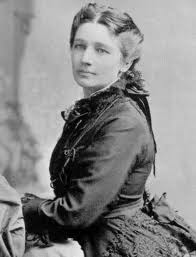
As to birthdays of the 23rd September, one of my favourite ladies Victoria Woodhull was born in 1838 – See previous Blogs Thursday 7th April 2011 The Women of 1838 and Emancipation and Equality  Saturday 2nd April 2011.

The 23rd September is also the birthday of a remarkable collection of musicians. The following were all born in this day:
1926 -  John Coltrane, American saxophonist (d. 1967)
1926 – Jimmy Woode, jazz bassist (d. 2005)
1927 - Mighty Joe Young, American Chicago blues guitarist (d. 1992)
1928 - Frank Foster, American tenor and soprano saxophonist, flautist, arranger, and composer (d. 2011)
1929 - Wally Whyton, English musician (d. 1997
1930 - Ray Charles, American musician (d. 2004)
1935 - Les McCann, American soul jazz piano player and vocalist
1939 – Roy Buchanan, American guitarist (d. 1988)
1949 - Bruce Springsteen, American singer and songwriter
What is it about the 23rd September?

Thursday, 22 September 2011

WRITERS AND ACTORS - THAT'S ENTERTAINMENT

The 22nd September is rather a mixed bag for me. It marks the end of the 60’s. That is to say I am 69 today and am entering my 70th year.  Not sure what to make of that, but there are various things theatrical which occurred on this day. To wit:

On the 22nd September 1598, the playwright Ben Jonson killed an actor in a duel and was indicted for manslaughter. He was not  stranger to difficulties with the law. In 1597 a play which he co-wrote with Thomas Nashe, The Isle of Dogs, was suppressed after causing great offence. Arrest warrants for Jonson and Nashe were issued by Elizabeth's so-called interrogator, Richard Topcliffe. Jonson was jailed in Marshalsea Prison and charged with "Leude and mutynous behavior", while Nashe managed to escape to Great Yarmouth.

A year later, Jonson was again briefly imprisoned, this time in Newgate Prison, for killing another man, the actor Gabriel Spenser, in a duel on 22 September 1598 in Hogsden Fields, (today part of Hoxton). Tried on a charge of manslaughter, Jonson pleaded guilty but was subsequently released by benefit of clergy, a legal ploy through which he gained leniency by reciting a brief bible verse (the neck-verse), forfeiting his 'goods and chattels' and being branded on his left thumb. In 1598 Jonson produced his first great success, Every Man in his Humour. William Shakespeare was among the first cast.

It appears history does not relate what the duel was all about, but it is not too difficult to image what might bring a writer and an actor to blows. There is a scene from All About Eve (1950) which demonstrates the problem.  Note the dialogue between actress Margo (Bette Davis) and  writer Lloyd Richards (Hugh Marlowe).


Continuing with matter entertaining, on 22 September 1910, the Duke of York’s Picture House opened in Brighton, and is now the oldest continuing operating cinema in Britain; and on the 22 September 1955 the UK television channel ITV went live for the first time.

I also share this birthday with the following: Erich von Stroheim (1885), John Houseman (1902), Joseph Valachi (1903), Arthur Lowe (1915), Dannie Abse (1923), Rosamunde Pilcher  (1924), Fay Weldon (1931), Ann Karina (1940), Nick Cave (1957), Andrea Bocelli (1958), Bonnie Hunt (1961), Rupert Penry-Jones (1970) and my ‘twin’ Marlena Shaw born in 1942. Here she is with a rendition of a Ramsey Lewis number.

Wednesday, 21 September 2011

IS THERE A SANTA CLAUS?


Reflecting on a comment from Ian Bowater on the gullibility of Indian Tribes, I think there is something in the character of the American citizen that permits her/him to express wonderment about the most straightforward and indisputable facts of life. This characteristic is most often pointed out by European intellectuals and writers, as well as some American intellectuals and writers who have been heavily influenced by European society. These are usually expatriates who spend some time living ‘abroad’, usually in England. Consider Henry James, Edith Wharton, Scott Fitzgerald, Hemingway and Mark Twain’s The Innocents Abroad, or The New Pilgrims' Progress; although in Twain’s case there is also, aside form the naïve, a quality of the canny and down to earth New Englander. Twain had little time for European class ‘society’; however, on the whole, the American citizen maintains a degree of guilelessness. It is not necessary that s/he be born and bred in America, merely living there for a short time and it seeps into the brain like some form of osmosis. Perhaps it’s something in the water? I include most of the North American continent in this attribute.

In keeping with my general theme, I noticed the following item. Is There a Santa Claus? was the title of an editorial appearing 114 year ago, today,  in the September 21, 1897 edition of The New York Sun. The editorial, which included the famous reply "Yes, Virginia, there is a Santa Claus", has become an indelible part of popular Christmas folklore in the United States and Canada.

In 1897, Dr. Philip O'Hanlon, a coroner's assistant on Manhattan's Upper West Side, was asked by his then eight-year-old daughter, Virginia (1889–1971), whether Santa Claus really existed. She had begun to doubt there was a Santa Claus, because her friends had told her that he did not exist.
Dr. O’Hanlon suggested she write to The Sun, a prominent New York City newspaper at the time, assuring her that "If you see it in The Sun, it's so." He unwittingly gave one of the paper's editors, Francis Pharcellus Church an opportunity to rise above the simple question and address the philosophical issues behind it.

The Sun was a New York newspaper that was published from 1833 until 1950. It was considered a serious paper, like the city's two more successful broadsheets, The New York Times and the New York Herald Tribune. The Sun was the most politically conservative of the three.

In replying Yes There is a Santa Claus, Church added, “ He exists as certainly as love and generosity and devotion exist, and you know that they abound and give to your life its highest beauty and joy…You might as well not believe in fairies…The most real things in the world are those that neither children nor men can see…Nobody can conceive or imagine all the wonders there are unseen and unseeable in the world.”

Tolkein 1916


It was 140 years later, that on the 21st September 1937, that J.R.R.Tolkein’s The Hobbit was published. The British have always believed in fairies, but not in a naïve way, more of a display of eccentricity. But…


Five years on from that, on the 21st September 1942, a World War was raging. The B-29 Superfortress made its maiden flight; whilst to celebrate Yom Kippur, on this day in 1942, the Nazis sent 1000 Jews of Pidhaytsi in the West Ukrain to Belzec extermination camp, they ordered the permanent evacuation of Konstantynow to the Ghetto in Biala Podlaska (established to assemble all Jews from the nearby towns) and in Dunaivtsi, Ukraine, they murdered 2,588 Jews.


Twenty two years later, on the 21st September 1964, the North American XB-70 Valkyrie, the world’s first Mach 3 bomber, made its maiden flight from Palmdale, California.


I guess some stopped believing that “love and generosity and devotion exist, and you know that they abound and give to your life its highest beauty and joy.”